
Quick Answer
For most San Diego homes, a full deep clean every three to four months is the right rhythm, paired with a standard cleaning every two weeks in between. That is the schedule the majority of our recurring clients are on, and it holds up across the county.
The number moves based on four things: how many people live in the house, whether there are pets, how close you are to the coast, and whether anyone is maintaining the place between visits. One person in a Bankers Hill condo with no pets can stretch a deep clean to every six months. A family of five with two dogs in Chula Vista needs one every eight to ten weeks, and they will still see buildup.
Here is the part most people miss. Deep cleaning frequency is not really about the dirt you can see. It is about the places nobody touches during a normal weekly tidy: grout lines, shower door tracks, the dishwasher gasket, baseboards, vent covers, under the bed, behind the toilet, inside the oven. Those surfaces accumulate on a slow clock, so you do not notice them getting worse week to week, and then one day the grout is gray and the shower glass has a film that will not wipe off.
San Diego has two local accelerators that push the schedule tighter than generic national advice. Our water is hard, roughly 17 to 20 grains per gallon across most of the county, so mineral scale forms on glass, chrome, and tile faster than it does in most of the country. And within a couple of miles of the water, salt air and fine coastal dust settle on window sills, ceiling fans, and the tops of door frames.
If you have never had a deep clean done, start there regardless of the calendar, then maintain. That is almost always cheaper than deep cleaning over and over, because the first one carries years of backlog with it.
Why San Diego Changes the Answer
Most deep cleaning frequency guides are written for a generic American house. San Diego is not that house, and after years of cleaning homes from Imperial Beach up to Rancho Santa Fe, three local factors come up constantly.
Hard water builds scale on a predictable timeline
San Diego imports most of its water, and it arrives hard. In practice a glass shower enclosure starts showing visible cloudiness in about six to eight weeks if it is not squeegeed daily, and chrome fixtures develop white crust around the base within a few months. Scale is not dirt, and soap will not take it off once it has bonded. It needs an acidic descaler and dwell time, which is a deep cleaning task, not a weekly one.
This one factor is why we recommend quarterly rather than the twice-a-year schedule that works in soft water regions. Wait six months between deep cleans here and the scale on your shower glass stops being removable.
Coastal homes collect a different kind of dust
Homes in Point Loma, Ocean Beach, Coronado, and La Jolla pick up a fine, slightly sticky film that plain dusting pushes around rather than removes. It settles on horizontal surfaces first: window tracks, sills, baseboard tops, fan blades. Inland homes in El Cajon and Santee get drier, heavier dust that lifts easier but arrives faster, especially during Santa Ana conditions.
HOA and rental turnover add their own clock
Plenty of our condo clients in Little Italy, Downtown, and Otay Ranch schedule a deep clean around annual HOA inspections. Short-term rental owners have the tightest clock of all, because a unit turning over weekly accumulates in a quarter what a family home does in a year.
Deep Cleaning Frequency by Household Type
This table reflects what we actually schedule, not a theoretical ideal. The right column assumes a regular cleaning is happening in between, either by us or by you.
| Household | Deep clean every | Why |
|---|---|---|
| 1 to 2 adults, no pets, condo or apartment | 5 to 6 months | Low traffic, less floor area, mostly a bathroom scale problem |
| 2 adults, no pets, house | 4 months | More square footage and more surfaces nobody touches |
| Family with kids, no pets | 3 months | Bathrooms and kitchen take the load, handprints and baseboards |
| Family with kids and pets | 8 to 10 weeks | Hair works into upholstery, baseboards, and vent covers fast |
| Coastal home within 2 miles of the water | 3 months | Salt film on tracks, sills, and fixtures |
| Short-term or vacation rental | 6 to 8 weeks | Constant turnover, guests do not report small buildup |
| Home with allergy or asthma concerns | 8 weeks | Vents, upholstery, and under-furniture dust reservoirs |
| No cleaning happening in between | 6 to 8 weeks | Nothing is resetting the clock between visits |
If you are trying to figure out where your home falls, the honest shortcut is to look at two things: your shower glass and your kitchen baseboards. Those two go first, and they go on schedule.
Not sure where your home falls on the schedule?
Tell us your square footage, bathrooms, and pets, and we will tell you straight what interval your home actually needs.
The Rooms That Set Your Schedule
You do not deep clean a house on one clock. Rooms degrade at different rates, and two of them decide the whole calendar.
Bathrooms run the fastest clock
Bathrooms are why quarterly beats twice a year in this county. Grout absorbs soap residue, shower door tracks hold standing water, and the hinge area on a glass enclosure collects scale where a squeegee never reaches. Toilet bases and the gap behind the bowl get skipped in regular cleaning because they need time and a different tool. Three months is about the limit before grout needs real scrubbing rather than wiping.
Kitchens are second, and grease is the reason
Cooking aerosolizes oil. It lands on cabinet fronts above the stove, the range hood filter, and the top edge of upper cabinets where nobody looks. Grease also polymerizes, meaning it hardens over time and gets harder to remove, so a six-month-old film takes roughly three times the labor of a three-month-old one. If you cook most nights, your kitchen alone justifies a quarterly interval. Worth knowing what a professional deep cleaning checklist actually includes before assuming your current service covers it.
Bedrooms and living areas can wait longer
Carpet and upholstery hold dust rather than spreading it, so buildup is slower and less visible. A weekly vacuum with a HEPA filter handles most of it. Under beds and behind large furniture are the exceptions, and those are twice-a-year items unless someone in the house has allergies.
Six Signs It Has Been Too Long
Forget the calendar for a second. These are what we look for on a walkthrough to tell whether a home is overdue.
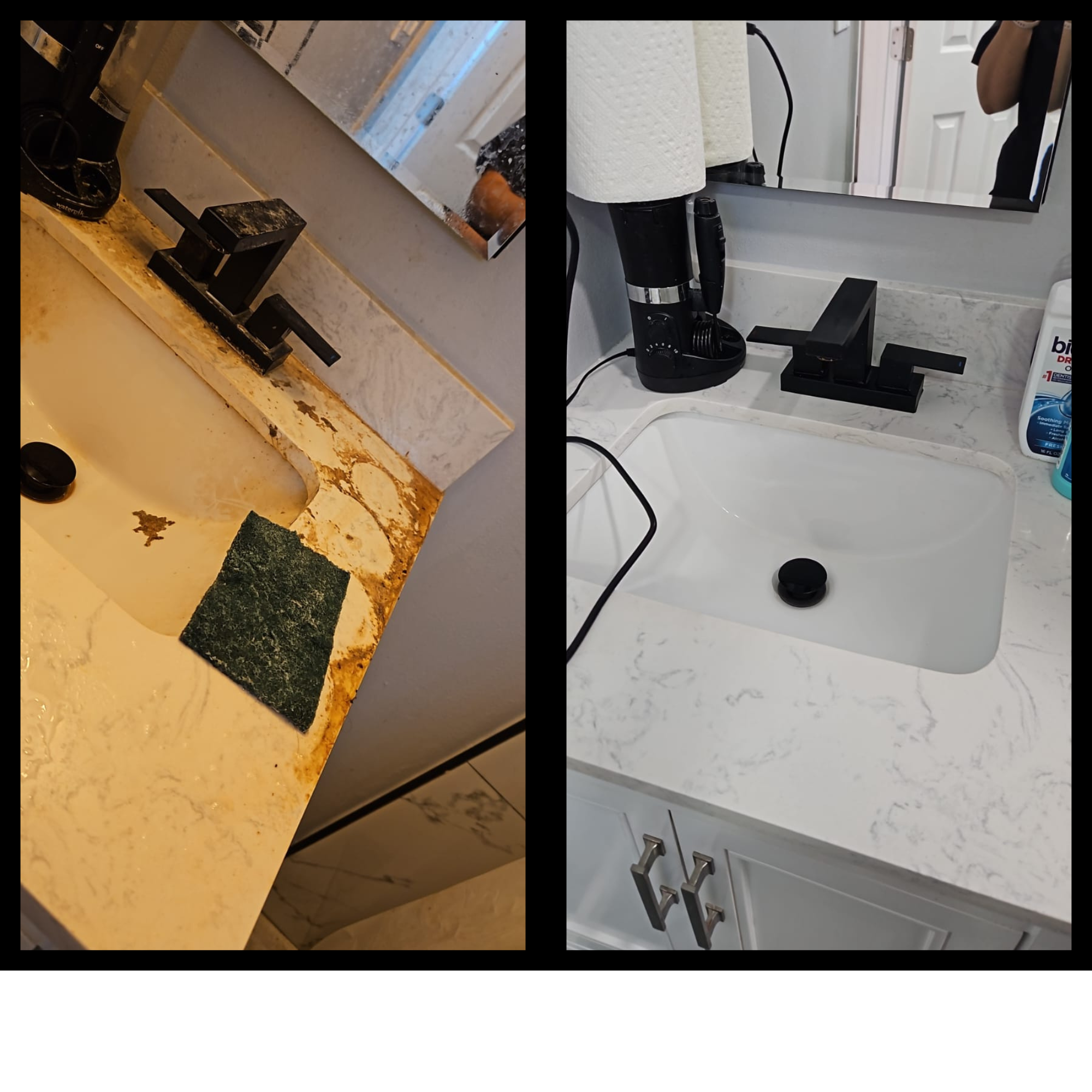
- Shower glass that stays cloudy after you clean it. Bonded mineral scale, not soap scum. Six months or more.
- Grout a different color in the traffic path than at the edges. The last real scrub was a while ago.
- A gritty feel on top of the baseboards. Dust mixed with moisture, common in coastal homes.
- Cabinet fronts near the stove that feel tacky. Grease film, and it only gets harder.
- A smell that returns a day after cleaning. Usually the dishwasher gasket, disposal splash guard, or a drain.
- Dust on the top edge of door frames and fan blades. If it is there, everything at that height is coated.
How Recurring Service Changes the Math
A deep clean is a reset. Regular cleaning is what keeps the reset from expiring.
Clients on a biweekly plan with us almost always stretch their deep clean interval, because our recurring visits rotate through deeper tasks. One visit we do baseboards, the next interior windows, the next vent covers. Over a quarter that spreads most deep cleaning work into the normal schedule, so the actual deep clean gets smaller and cheaper. People who book recurring house cleaning across San Diego effectively pay less per year than people who only call when things get bad.
The opposite pattern is the expensive one: skip regular cleaning, wait until the house feels out of control, then book a full deep cleaning twice a year. Each of those is a heavy job priced accordingly, and the house spends most of the year in rough shape. A standing maid service with a lighter deep clean on top is cheaper over twelve months and better the whole time.
What We See Across San Diego
Coastal clients in Point Loma, Ocean Beach, and Coronado need window tracks and sills treated as a quarterly item rather than an annual one, because the salt film holds dust against the surface. Inland clients in El Cajon and Lakeside deal with volume instead of stickiness, so their schedule can run slightly longer if someone dusts weekly.
Condo clients Downtown and in Bankers Hill have fewer square feet but a higher bathroom-to-square-foot ratio, so bathroom scale rather than floor area drives their interval. And clients with large dogs anywhere in the county land on the eight to ten week schedule whether they planned to or not, because hair works into baseboard edges, upholstery seams, and vent covers in a way a weekly vacuum does not resolve.
Get on a schedule that actually fits your house
Rated 4.9 stars on Google by San Diego homeowners. Licensed, insured, and background-checked cleaners.
Frequently Asked Questions
How often should you deep clean your house?
Every three to four months for most San Diego homes, assuming a regular cleaning is happening every one to two weeks in between. Homes with pets, kids, or heavy coastal exposure should move to every eight to ten weeks. Homes with no cleaning in between need a deep clean every six to eight weeks to stay ahead of buildup.
Is a deep clean worth it if I already clean weekly?
Yes, and it is a smaller job in that case. Weekly cleaning handles surfaces you touch and see. A deep clean handles grout, scale, grease film, vent covers, behind and under appliances, and the inside of fixtures. Those are different tasks with different tools, not the same task done harder.
How long does a deep clean take?
For a typical 1,800 square foot San Diego home with two bathrooms, expect roughly five to seven hours of labor, which usually means a team of two for three hours or so. First-time deep cleans run longer because of accumulated backlog. Homes that have never had one can run eight to ten hours.
Should I deep clean before or after a regular cleaning?
Deep clean first, then start the regular schedule. Deep cleaning is the reset, and running it after a standard cleaning wastes part of what you paid for. Once the deep clean is done, biweekly maintenance keeps it from sliding back.
Does hard water really change how often I need a deep clean in San Diego?
It does, and it is the main reason local advice differs from national advice. At 17 to 20 grains per gallon, scale bonds to glass and chrome in a matter of weeks. Past about six months, shower glass often cannot be fully restored and needs either professional restoration or replacement, so staying on a quarterly interval is cheaper than fixing it later.
What is the difference between a deep clean and a move-out clean?
A deep clean is for a home you live in, so it works around furniture and belongings and focuses on accumulated buildup. A move-out clean is done on an empty home and is judged by a landlord holding a deposit, which means inside every cabinet, drawer, closet, and appliance. Move-out cleans cover more surface area, but a lived-in deep clean often takes more detail work.
Ready for a Spotless San Diego Home?
Get a real cleaning quote in under 60 seconds. No phone tag, no waiting. Trusted by 170+ five-star San Diego clients.
Get Your Free EstimateOr Call 619-777-2063